
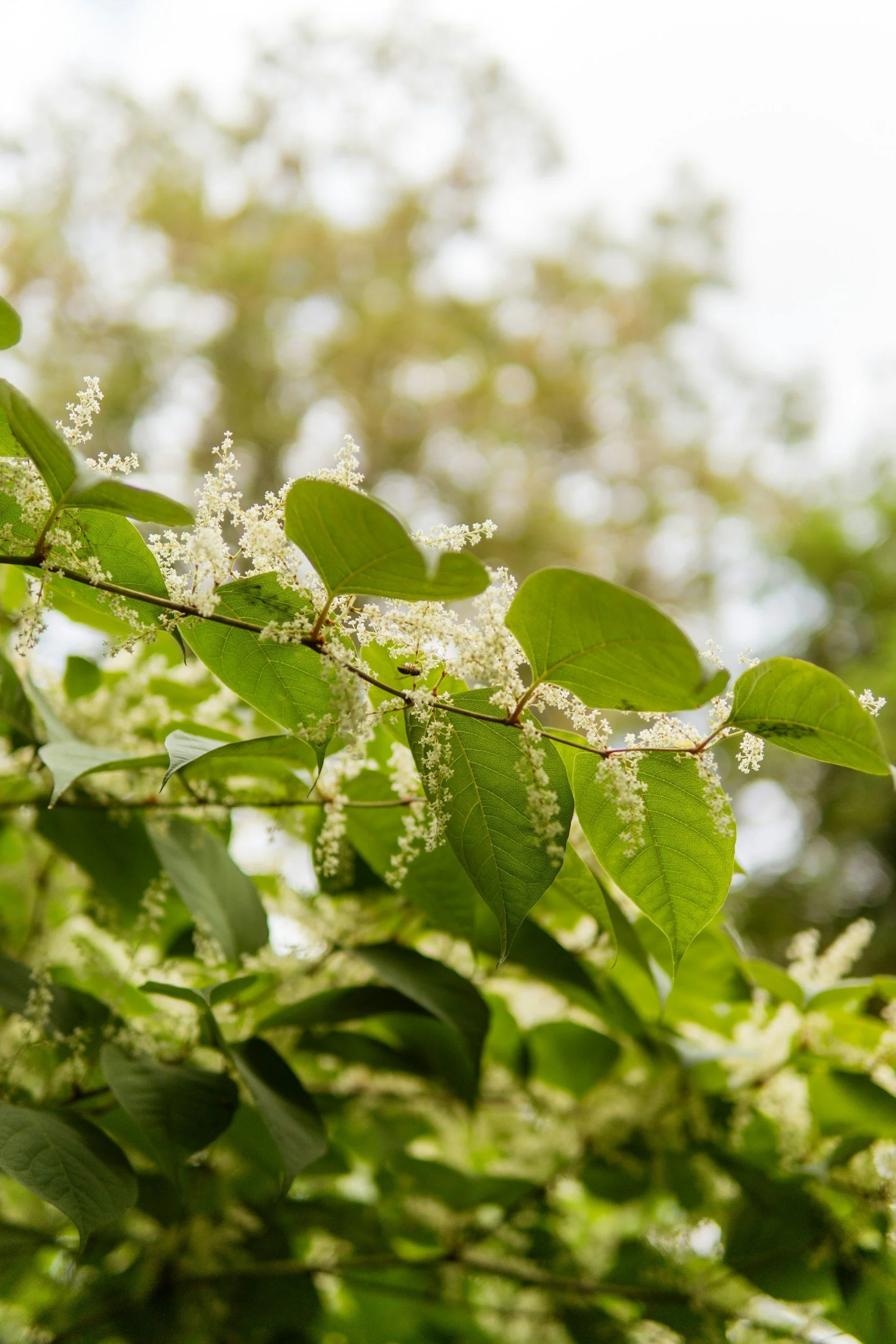
Japanese Knotweed Management Plan
Our Approach
Japanese knotweed rarely causes problems because it is “hard to kill”. It causes problems because it is easy to underestimate - and property decisions move faster than plants do. A seller wants to exchange, a buyer needs a lender’s OK, a landlord needs to protect an asset, and suddenly a clump of canes becomes a high-stakes risk.
A proper -JAPANESE KNOTWEED 5 YEAR MANAGEMENT PLAN is not gardening advice. It is risk control you can evidence. It is also a commitment: to treat methodically, record results, and stay on top of regrowth until the site is stable enough that buyers, surveyors, insurers, and your own future self can relax.
This article explains what a five-year plan should include, why five years is a common standard, what “good” looks like each year, and where homeowners and property managers get caught out.
Why a five-year plan exists in the first place
Japanese knotweed is persistent because of its underground rhizome system. You may remove canes and still have viable rhizome fragments in the ground. Those fragments can sit quietly and then push new growth when conditions suit. That is why quick fixes - cutting, strimming, digging without controls - so often lead to a worse problem and, in the wrong scenario, spread beyond your boundary.
Five years is a practical timeframe because it allows for repeated treatment cycles across multiple growing seasons, followed by monitoring that can pick up late regrowth. It also fits how property risk is assessed: you are not only trying to suppress the plant, you are proving control over time.
If you are buying or selling, the timeframe matters because stakeholders want evidence that the problem is being managed professionally, with a clear scope, mapped extent, and ongoing records. If you are managing a commercial or rental site, the timeframe matters because it supports compliance, budgeting, and predictable outcomes.
What a “management plan” should actually cover
A five-year plan should be more than a promise to treat. It should set out what is being treated, how it is being treated, where, when, and how progress will be recorded.
At minimum, a credible plan includes a surveyed baseline (location, extent, and risk areas), a treatment method suitable for the site constraints, a schedule of visits aligned to the plant’s growth cycle, controls around waste and biosecurity, and monitoring criteria for success.
What separates a plan that reassures from a plan that raises questions is documentation. If you cannot show clear mapping, photos, and measured observations, it becomes harder to demonstrate improvement, harder to manage boundaries, and harder to answer lender and conveyancer queries without delay.
Start with certainty: identification and site scoping
Many homeowners first spot knotweed when canes appear in spring or summer, but identification is frequently muddied by lookalikes. Misidentification causes two costly mistakes: ignoring genuine knotweed for another season, or spending money on treatment for a plant that is not knotweed.
If you are still at the “is it or isn’t it?” stage, move quickly to proper confirmation. A fast check can prevent weeks of uncertainty and stop accidental spread through well-intentioned clearance.
If you want to sanity-check your own observation first, use a structured guide rather than internet images. Our article on How to Identify Japanese Knotweed Fast walks through the seasonal cues that matter.
Once identified, scoping is not just “where you can see it today”. Knotweed can run along fence lines, through beds, under paving edges, and into neglected corners. A proper scope looks at the whole risk envelope: boundaries, structures, outbuildings, retaining walls, neighbouring land, and any area where soil disturbance has happened.
That scoping step is the foundation of the next five years. If it is wrong, everything downstream becomes harder.
Year 0 (before Year 1): the survey and baseline evidence
A five-year plan starts with a baseline that you can defend. In property terms, that means a written report that is clear, specific, and supported by evidence.
A strong baseline typically includes:
A site plan showing the infestation footprint and the areas at risk (including boundary lines)
Photographs that clearly show stems, leaves, and the context of where growth is occurring
Measured observations - not just “small patch”, but approximate area, distance to boundaries, and proximity to structures
Notes on access constraints and sensitive areas (watercourses, neighbouring gardens, hardstanding, planted borders)
A recommended treatment pathway and why it suits the site
This is where many do-it-yourself approaches fall down. You might be able to apply herbicide, but you cannot easily produce transaction-ready evidence that stands up to scrutiny.
If the knotweed question sits inside a purchase or remortgage, you also need to anticipate what lenders and their valuers are looking for. The detail that matters is set out in Knotweed Survey for a Mortgage: What Lenders Want. Even if you are not dealing with a lender today, that level of clarity is still the gold standard for protecting future value.
Treatment approaches within a five-year plan (and what affects the choice)
There is no single “best” treatment without context. The right plan depends on location, extent, access, proximity to boundaries, and what you need the site to be used for during treatment.
Most five-year programmes in residential and light commercial settings are built around herbicide-led control, often with stem injection and/or foliar application depending on plant maturity and access. Excavation and removal can be appropriate in some scenarios, but it introduces its own risks, costs, logistics, and disposal requirements.
The key trade-off is speed versus disruption. Excavation can look quicker on paper, but it requires careful handling of contaminated soil, controlled transport, and lawful disposal. Herbicide management is typically less disruptive and can be cost-effective, but it relies on repeated visits and patience.
A professional plan explains this trade-off in plain terms and documents the method choice so that a buyer, a managing agent, or a commercial stakeholder can understand what is happening and why.
Year 1: establish control and stop accidental spread
The first year is about taking control of the site and removing uncertainty.
Operationally, Year 1 should focus on two things. First, treat effectively across the growing season. Second, put sensible controls in place so the infestation is not accidentally moved around the property.
Treatment visits should align with growth. Early growth is not always the best time to hit the plant hard - timing matters because you want the herbicide to be translocated down into the rhizome system. A plan should set expectations about when visible die-back occurs and why regrowth may still appear.
At the same time, Year 1 is where you tighten up biosecurity. If you are cutting back vegetation, landscaping, replacing fences, or digging beds, you must manage the risk of moving rhizome fragments. Even small pieces can regenerate.
If you share boundaries, Year 1 should also include a neighbour-aware view. Knotweed rarely respects fence lines, and disputes often start because one side treats while the other side disturbs. A clear map and written notes help keep discussions factual.
You should expect Year 1 documentation to include dated photos and visit notes. When you are later asked “what has been done?”, you do not want to rely on memory.
Year 2: reduce vigour and prove the programme is working
In Year 2, the goal is typically reduced vigour: fewer canes, weaker growth, and less spread. This is where people sometimes panic because they still see knotweed and assume the treatment has failed. In reality, controlled management often looks like a gradual reduction rather than an instant disappearance.
A good plan sets out what progress looks like, using repeatable measures. That might include noting the approximate area of emergence compared to the baseline, photographing the same angles, and recording any new points of growth.
Year 2 is also the time to review the site context. Has anything changed that affects the programme? A new extension, a replaced patio, a change in access, a change in tenancy, or new planting schemes can all interfere with treatment or monitoring.
If you are in the middle of a sale or purchase, Year 2 evidence can be extremely valuable. It shows the problem is not being ignored, it is being managed, and there is a track record.
Year 3: chase down regrowth and tighten the boundary story
Year 3 tends to be where the infestation is materially weakened, but it is also where complacency can creep in. You may see far less growth and assume you can stop. This is the point where knotweed often reappears later, and the clock effectively restarts.
In a disciplined five-year plan, Year 3 is about persistence and precision. Any regrowth is treated promptly and recorded. Monitoring focuses heavily on edges and boundaries - the places where small escapes can become next year’s visible problem.
If your knotweed is near a fence line, a shared path, a rear alley, or an unmanaged strip of land, your plan needs to keep acknowledging that risk. A buyer’s surveyor will not only ask “is it under control?” but also “what is the risk of reinfestation?” Clear boundary notes and mapping help answer that.
For landlords and property managers, Year 3 is also where site communication matters. If grounds maintenance contractors are involved, they should be told where not to dig and what to report. A plan that lives in a drawer is a plan that gets undermined by routine works.
Year 4: monitoring becomes the work
By Year 4, many sites show minimal visible growth if treatment has been consistent. That does not mean the job is done. It means the work shifts: monitoring becomes more important than heavy intervention.
Monitoring is not a quick glance from the patio. It is a structured walkover, looking in the same areas each time, checking known hotspots, checking disturbed ground, and paying attention to late-season growth.
Year 4 is also a sensible time to prepare for future property questions. If you intend to sell in the next few years, having clean, well-organised documentation makes conversations easier. If you manage multiple properties, Year 4 records help you standardise your approach across the portfolio.
Crucially, Year 4 is where you want your paperwork to read like a story: baseline, visits, reductions, and current status. That story is what reassures other parties that this is controlled.
Year 5: final treatment season and evidence that stands up later
Year 5 is not a “victory lap”. It is the final planned season in a structured programme, and it should be handled with the same discipline as Year 1.
If growth appears, it is treated. If no growth appears, that is recorded with the same seriousness - dated notes and repeat photos showing the relevant areas.
This is also where people often ask, “So is it gone?” The honest answer is that knotweed management is about confidence levels backed by evidence. After five years of correct treatment and monitoring, the risk is typically far lower, but any future disturbance of soil still needs sensible care.
If your plan includes a guarantee, Year 5 documentation is vital. It provides the evidence base that the programme was followed and that any future issues can be dealt with under the terms agreed.
For a deeper explanation of what a structured programme includes and why it is set up this way, see 5-Year Japanese Knotweed Treatment Plan Explained.
The paperwork is not admin - it is the product
People dealing with knotweed often think the visible treatment is the main service. For property risk, the paperwork is equally important.
A transaction does not run on reassurance. It runs on documents: survey reports, maps, photos, and clear statements of what has been done and what is planned.
If you are selling, a well-evidenced management plan reduces the chance of last-minute renegotiation. If you are buying, it reduces the risk of inheriting an unmanaged problem. If you are a landlord or commercial owner, it supports your duty of care and asset protection.
Conveyancing also has its own rhythm. When questions are raised, delays are expensive and stressful. Having a report that is ready to share, rather than a vague description of “we sprayed it once”, makes a difference. If you want to understand how this tends to play out in the legal process, Do You Need a Knotweed Report for Conveyancing? sets expectations clearly.
Common ways a five-year plan goes wrong
Most failures are not because the plant is unbeatable. They are because the plan is inconsistent, undocumented, or undermined by site activity.
One common problem is stopping early. A year of low growth can tempt owners to pause treatment. Knotweed is very good at taking that gap.
Another problem is disturbance: digging out a bed, replacing a fence, installing a driveway, or even aggressive strimming in the wrong place. Disturbance can spread rhizome fragments and move the infestation footprint.
A third issue is boundary blindness. Owners focus on what they can see in their own garden and ignore the strip behind the shed, the other side of the fence, or the unmanaged land next door. Knotweed does not care who owns the soil.
Finally, there is the documentation gap. Without repeat photos, maps, and dated notes, you may be doing the right work but still struggle to satisfy a buyer, lender, or managing agent.
What to expect on site during a professional programme
A proper programme should feel controlled and calm, not chaotic. Treatment is planned around access and seasons. Observations are recorded. Sensitive areas are accounted for. Waste and contaminated material are handled with care.
You should also expect clarity on what you need to do - and what you must not do. That includes where not to dig, how to manage garden works during the programme, and what to report if you spot new growth.
If speed matters because you are mid-transaction, ask about turnaround times for the written report. Next-day paperwork can remove days of uncertainty when solicitors and agents are chasing.
The role of guarantees - and what they really mean
A guarantee is not a magic wand. It is a framework that sits behind a documented plan.
For property owners, the value is peace of mind and future-proofing. For buyers and lenders, it is additional reassurance that the issue has a safety net and an ongoing responsibility attached.
The detail matters: what is covered, how long it lasts, what conditions apply, and what evidence is required. A guarantee should be explained in plain language, with no nasty surprises.
If you are comparing providers, focus on whether the guarantee is insurance-backed and how it transfers if the property is sold. Those points can be decisive when a transaction is under pressure.
When a five-year plan is not enough (and what happens then)
Sometimes, site constraints mean progress is slower. Dense stands, repeated disturbance, adjacent unmanaged land, or access issues can all prolong management. That does not mean the plan was pointless - it means the risk profile is different.
In these cases, a responsible provider will explain the options: extending monitoring, adjusting treatment methods, or coordinating with neighbouring landowners where possible. The key is that decisions are made from evidence, not guesswork.
It is also worth saying plainly: if you cannot safely access the area to treat and monitor, you cannot honestly claim control. Any plan should be realistic about access.
How to choose the right help (without wasting time)
If you need a five-year management plan for property reasons, choose a provider that treats this as a formal risk service, not casual grounds work.
Look for clear deliverables: a site survey, a written report, mapping, dated photographs, and a structured treatment schedule. Ask how quickly you will receive paperwork, what the visits include, and how progress will be recorded year to year.
If you are in London or the surrounding counties and need a documented, mortgage- and conveyancing-ready approach, Japanese Knotweed Group Ltd provides on-site surveys and structured treatment with rapid reporting and long-term reassurance - see https://www.japaneseknotweedsurvey.com
.
A final thought before you book anything
If knotweed is on your mind, act while you still have choices. The earlier you get a proper baseline and a documented plan, the easier it is to protect value, keep transactions moving, and avoid the stress of last-minute surprises.